
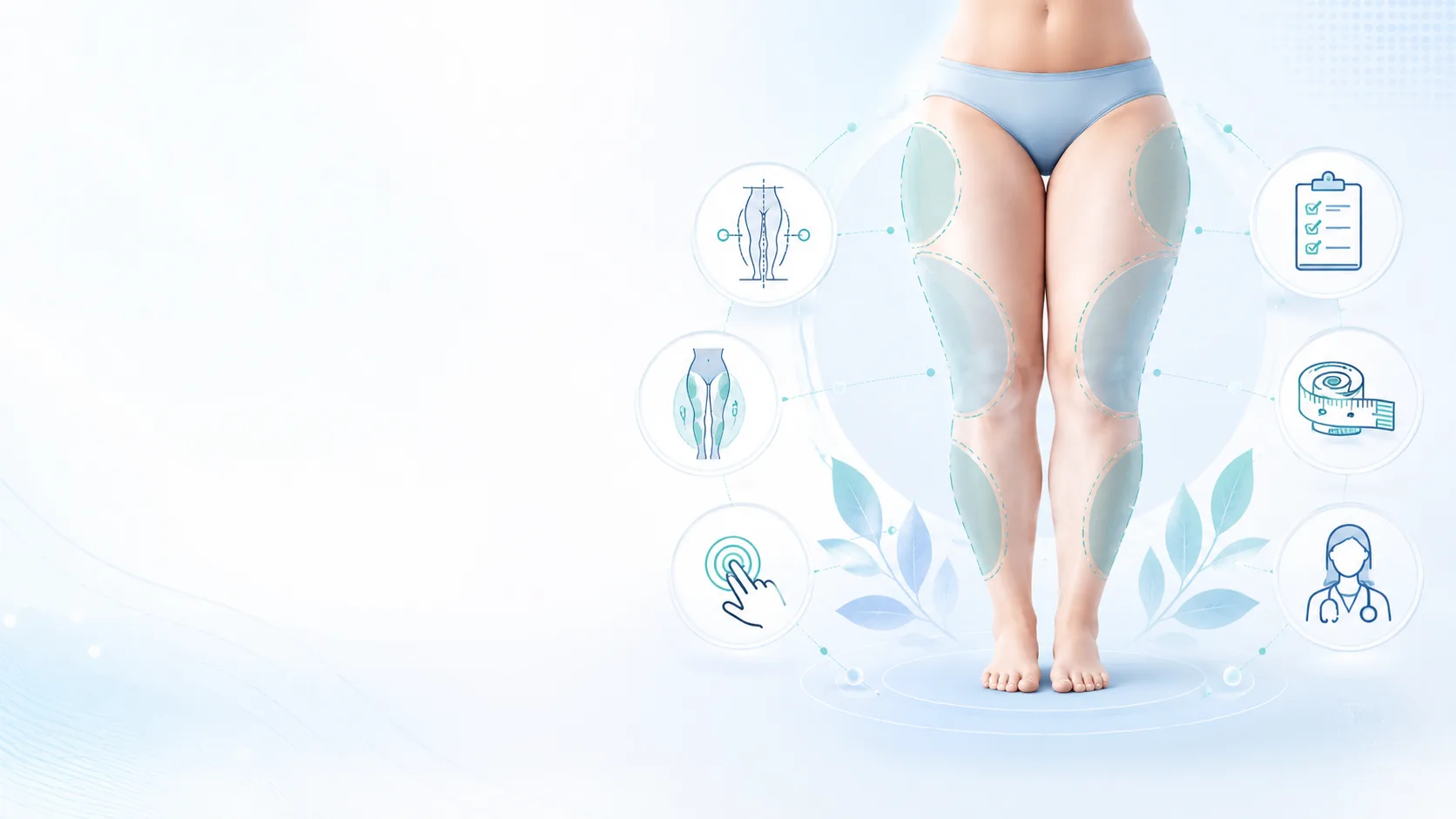
Lipedema is a chronic adipose tissue disorder seen mostly in women. It can cause symmetrical enlargement of the legs, hips and sometimes arms, together with pain, tenderness to touch and easy bruising. It is not simply ordinary weight gain, but it may be confused with obesity, venous insufficiency, lymphedema, thyroid problems or insulin resistance, and more than one condition can exist in the same patient. Diagnosis is usually based on history and physical examination rather than a single blood test. The key point is that lipedema is not recognized from one sign alone; distribution, pain, spared feet and response to weight loss need to be considered together (Faerber et al., 2024; Herbst et al., 2021).
What exactly is lipedema?

Lipedema is recognized by a disproportionate and often painful increase in subcutaneous fat, the fat layer just under the skin. It is most visible in the legs and hips, and in some people the arms are involved. Patients often describe that the upper body changes with weight loss while the legs remain heavy, painful or tender.
The word lipedema historically combines fat and edema, but current clinical thinking does not treat it as simple water retention. Since the early descriptions, the condition has been understood more clearly, although its exact cause and mechanism remain uncertain (Wold et al., 1951; Kruppa et al., 2020).
How can lipedema symptoms be noticed?
Individual complaints may sound ordinary when heard separately. Leg enlargement, heaviness by the end of the day, pain with pressure, easy bruising, difficulty fitting clothes around the lower body and relatively spared feet make more sense when viewed through lipedema symptoms.
Lipedema pain is not identical in every patient. Some people mainly feel tenderness to touch; others feel tension or burning after standing. Easy bruising can occur, but new widespread bruising, bleeding tendency or medication related changes need a separate medical assessment.
Can lipedema be mistaken for weight gain or cellulite?
Yes. Lipedema may be labeled for years as weight gain, cellulite or regional fat. This distinction changes expectations. In general weight gain, fat is usually distributed more broadly. In lipedema, the pattern is more often lower-body dominant, symmetrical and painful. That is why it is incomplete to call every enlarged leg obesity, but also unsafe to call every resistant fat area lipedema. lipedema vs obesity helps clarify this common misunderstanding.
Cellulite is mainly related to the dimpled appearance of the skin surface. In lipedema, pain, tenderness, bruising and disproportion are more clinically meaningful. This is not only a cosmetic distinction.
Why do stages and types matter?
Stages describe changes in the skin surface and tissue texture. Types describe which body areas are involved. Stage and type do not fully represent severity by themselves, because pain, mobility, venous or lymphatic problems and daily function matter as well.
A patient may appear early-stage but have major pain; another may have more visible tissue change with less pain. Therefore lipedema stages and types of lipedema should be read together, without making decisions from appearance alone.
How is lipedema diagnosed?
Lipedema diagnosis is usually clinical. The history explores when symptoms started, whether puberty, pregnancy or menopause played a role, family history, weight changes, pain and bruising. Physical examination looks at fat distribution, whether the feet are spared, whether swelling pits, and whether varicose veins or skin changes are present.
Blood tests do not prove lipedema. They may still be ordered to assess thyroid disease, insulin resistance, kidney or liver problems, medication related edema or inflammatory conditions. how lipedema is diagnosed should therefore be read not only as a list of tests, but as a guide to avoiding misdiagnosis.
Which conditions can look similar?
Lipedema is commonly confused with obesity, lymphedema, venous insufficiency, cellulite and hormonal or metabolic problems. Lymphedema is swelling caused by impaired lymph drainage; foot involvement and pitting can be more apparent. Venous insufficiency means that leg veins do not return blood efficiently, often causing end-of-day heaviness, varicose veins and ankle swelling.
These differences are practical. Misdiagnosis may lead to years of dieting alone, unnecessary fear or delayed treatment of a vascular or lymphatic problem. lipedema and lymphedema differences should function as a central comparison page, especially because sudden one-sided swelling, redness or shortness of breath should not be explained away as lipedema.
Why talk about thyroid disease, insulin resistance and venous insufficiency?
Lipedema does not explain every complaint by itself. Hypothyroidism, an underactive thyroid gland, can add fatigue, constipation, weight gain and a swelling sensation. Insulin resistance can affect blood sugar swings, cravings, waist fat and weight management. lipedema and thyroid problems and lipedema and insulin resistance help separate these added burdens from the core lipedema pattern.
Venous insufficiency can also coexist with lipedema. Varicose veins, standing-related heaviness, ankle swelling or skin discoloration make lipedema and venous insufficiency relevant because the vascular side may need its own assessment (Bindlish et al., 2023).
What is the aim of lipedema treatment?
The aim is not to offer one miracle method. Care focuses on reducing pain, preserving mobility, managing swelling sensation, balancing metabolic load, protecting the skin and making daily life more manageable. Current sources describe lipedema care as multidisciplinary in many patients (Faerber et al., 2024; Herbst et al., 2021).
Nutrition does not erase lipedema tissue, but it may help blood sugar balance, inflammatory load, bowel habits and weight management. When low-carbohydrate or ketogenic plans are discussed, keto and low-carb diet moves expectations away from curing lipedema and toward managing metabolic burden.
Exercise should not feel like punishment. Low-impact walking, water exercise, resistance training and mobility work can be adapted to the individual. lipedema exercises should therefore be seen as a safe movement framework that considers pain and joint load.
Manual lymph drainage and compression do not melt fat. In selected patients they may help manage heaviness, tissue tension and end-of-day fullness. manual lymph drainage and compression places them as part of conservative care rather than a stand-alone cure.
What does a self-test do?
A self-test does not diagnose lipedema. It can help patients organize their findings, prepare for a medical visit and notice safety signs that require urgent assessment. lipedema self-test is best used for the question, “Which findings should I explain clearly to my doctor?” rather than “Do I definitely have lipedema?”
Practical takeaways
- Lipedema is not simply weight gain or cellulite; pain, tenderness, symmetry and distribution matter together.
- Diagnosis is usually clinical, based on history and examination.
- Relatively spared feet and lower-body fat that resists weight loss can be clues, but they do not diagnose lipedema alone.
- Thyroid disease, insulin resistance, venous insufficiency, lymphedema and obesity may coexist.
- Nutrition, exercise, compression and manual lymph drainage may support symptom management in suitable patients.
- Sudden one-sided swelling, redness, warmth, severe calf pain, shortness of breath or chest pain requires urgent medical assessment.
Which doctor should you see if you suspect lipedema?
A good starting point is a clinician who understands lipedema and takes differential diagnosis seriously. If varicose veins, end-of-day heaviness, ankle swelling or skin changes are present, vascular assessment becomes especially important. which doctor to see for lipedema can help patients start through the right clinical doorway.


