

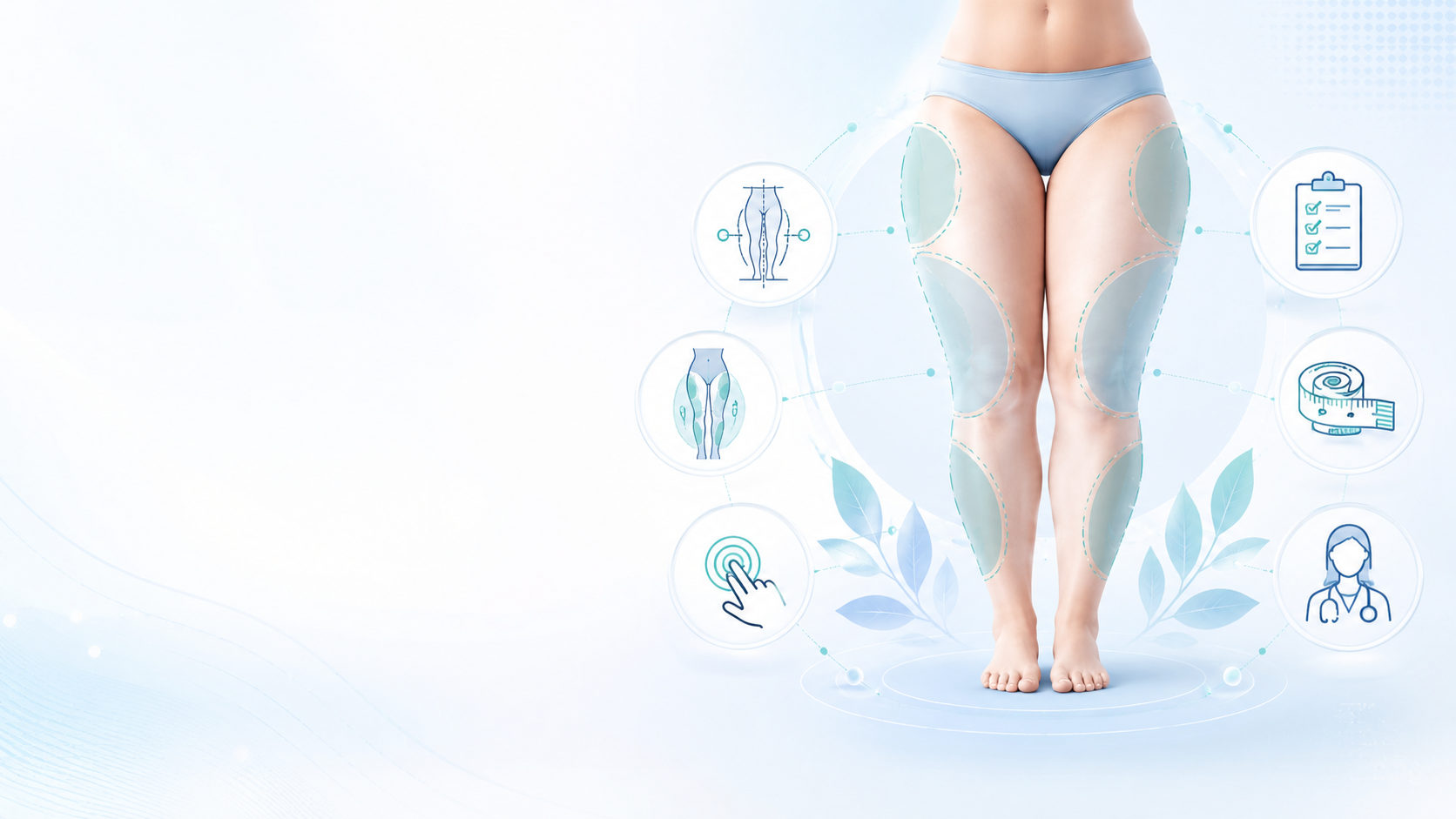

Manual lymph drainage and compression are considered supportive steps in conservative care with appropriate expectations.
Manual lymph drainage and compression are not methods to eliminate adipose tissue in lymphedema. A more accurate expectation is that these can help manage the sensation of heaviness in the legs, tissue tension, the feeling of fullness at the end of the day, and pain perception in some patients. These supports do not change the diagnosis; the symptoms of lymphedema, venous insufficiency, and general weight gain should be evaluated together. Especially if symptoms such as leg pain, easy bruising, and symmetrical thickening are present, lymphedema symptoms provide a more solid foundation for interpreting all findings.
What does manual lymph drainage target in lymphedema?
Manual lymph drainage is a gentle technique applied to the skin and superficial tissues aimed at supporting lymph flow. The lymphatic system is a network that helps return excess fluid and some proteins from the tissues to the circulation. The problem in lymphedema is not only fluid accumulation; the underlying issue is associated with painful and disproportionate fat distribution. Therefore, the goal of manual lymph drainage is not to dissolve the lymphedema fat, but to help reduce tissue tension and the sensation of heaviness undefined; undefined.
Some patients report feeling lighter in their legs, being less sensitive to touch, or experiencing more comfort while moving after a session. This response is not the same for every patient. If pain is dominant, if there is venous insufficiency, or if lymphedema has progressed, the treatment plan may change; the difference between lymphedema and lymphedema illustrates why it is so important to accurately identify the underlying condition before massage.

Conservative supports aim at different goals; the expectation is not fat loss, but symptom management.
How can compression help in lymphedema?
Compression aims to limit excessive tissue tension throughout the day and support the effects of the muscle pump by applying controlled pressure from the outside. The muscle pump helps venous and lymphatic return, particularly during walking, especially through the use of the calf muscles. Therefore, compression should not be evaluated as a treatment on its own; it should be seen as a support that works in conjunction with movement and daily routines. The expectation that compression will burn lymphedema fat or eliminate the disease is incorrect undefined.
The choice of pants, stockings, or specialized compression garments should not be arbitrary. The pressure class, fabric type, fit around the waist and groin, fold behind the knee, skin sensitivity, and the patient's daily movement should be evaluated together. Seeing compression garments only as tight clothing often leads to disappointment; lymphedema tights practically demonstrate where these garments can be effective and where exaggerated expectations may arise.
Should manual lymph drainage and compression be considered together?
For many patients, the best approach is not to rely on a single method, but to plan complementary methods. Manual lymph drainage can help reduce tissue tension; compression can help maintain this relaxation throughout the day. However, this duo creates an incomplete plan when considered separately from nutrition, walking, water-based exercises, resistance training, sleep, and metabolic monitoring.
Movement is especially important here. Low-impact walking or water-based exercises done under compression can help activate the muscle pump in the calves more regularly. The purpose of exercise in lymphedema is not to strain the patient, but to manage circulation and joint load within safe limits; lymphedema exercises therefore complement the movement dimension of the same conservative approach as massage and compression.
Is it safe to apply at home?
Performing strong massage at home, rubbing bruised or sensitive tissues, or applying prolonged pressure to painful areas is incorrect. Lymphedema tissue can already be sensitive to pressure. Rigid applications without training can lead to skin irritation, bruising, or increased pain. Home support should revolve more around breathing exercises, skincare, gentle guidance, taking appropriate positions to rest the legs, and developing a regular movement habit.
Some patients can provide home support with the gentle techniques taught to them after professional treatment. The limit here is crucial: home application should not change the diagnosis or treatment. home manual lymph drainage specifically addresses this distinction in terms of safety, training, and expectation management.
What situations should vascular assessment be performed primarily?

In some findings, it is safer to postpone massage and seek a medical evaluation first.
The increased heaviness in the legs at the end of the day does not always arise from lymphedema. Varicose veins, venous insufficiency, prolonged standing, medication-induced fluid accumulation, or lymphedema can all contribute to the picture. Venous insufficiency occurs when the veins in the legs cannot effectively return blood to the heart. In this case, compression may be beneficial; however, it is critical to understand the cause accurately undefined; undefined.
If there is sudden unilateral swelling, severe pain in newly developed calves, redness, increased temperature, shortness of breath, or chest pain, massage should not be applied, and urgent evaluation should be considered. Considering that lymphedema and vascular diseases can overlap, lymphedema and venous insufficiency positions evening heaviness, varicose veins, and edema in a safer clinical framework.
What lesson should the patient take from the article?
Manual lymph drainage and compression should not be presented as miraculous treatments for lymphedema. These gain meaning with the right patient, the right measurement, the right pressure, regular movement, and the evaluation of accompanying vascular/lymphatic issues. If lymphedema is present or there is significant edema, complex decongestive therapy principles may come into play; in this area, compression, exercise, skincare, and manual lymph drainage can be evaluated together for the appropriate patient (International Lymphology Society, 2020).
In short, massage and compression do not eliminate lymphedema, but they can make the day more manageable for some patients. The value of the treatment plan depends on realistic expectations and their use in conjunction with other conservative measures.