

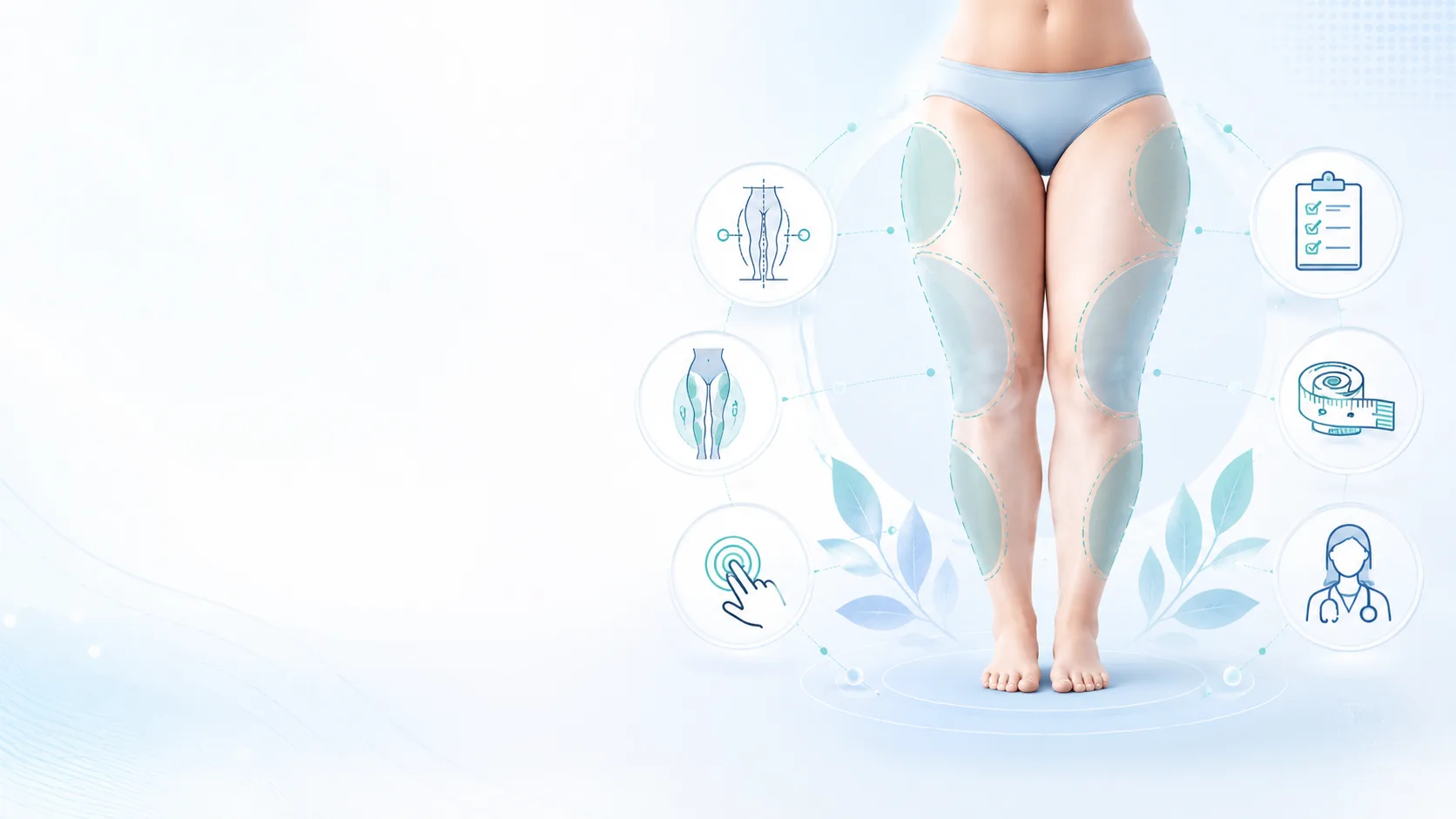
The purpose of exercise in lipoedema is not to eliminate lipoedema fat. The aim is to make pain, heaviness, mobility, muscle function, and circulation burden more manageable. This distinction is important because aggressive programs can increase symptoms in some patients. The existing literature supports individualized low-impact movement, aquatic activities, gradual strength training, flexibility, and breathing exercises, while still indicating that standard long-duration exercise prescriptions are limited (Annunziata et al., 2024; Lanzi et al., 2025).
Why should lipoedema exercise not be treated like ordinary weight loss training?

Exercise for lipoedema should aim to sustain movement rather than simply overcoming pain.
Many patients are not only struggling with body weight. Pain, sensitivity, easy fatigue, a feeling of heaviness in the legs, and knee loading can make exercise difficult even before the program starts. Instructions to do more exercise do not solve this situation. The plan should first ask where the pain is located, when the feeling of swelling increases, and how the body feels the next day.
Lower body fats may respond less than expected to diet and intense exercise, which can be discouraging. Exercise does not eliminate lipoedema but can support the calf muscle pump, venous and lymphatic flow, joint support, and daily function. When expectations become mixed up, lipoedema and obesity can help clarify that lipoedema tissue is not the same as general weight gain.
Which exercises are generally better tolerated?
Most patients start with low-impact activities. Low impact means movements that do not load the joints with continuous bouncing or hard landings. Examples include comfortable walking, riding a stationary bike, elliptical training, water walking, light resistance work, mobility exercises, and breath-supported movement. The primary goal is not intensity; it is to create a rhythm that the body can repeat.
The program should stay below the threshold for pain flare-ups. Burning pain, sharp knee pain, groin pain, or unusual swelling the next day indicate that the dosage needs to be reduced. lipoedema pain can help patients distinguish between lipoedema pain, pressure sensitivity, and ordinary muscle fatigue.
Why is water exercise often easier?
In water, body weight creates less stress on the joints. Hydrostatic pressure can make the weight feel more manageable for some patients. Water walking, aqua jogging, swimming, or simple pool exercises can be beneficial when knee, hip, back, or ankle loading is an issue. The evidence base remains limited, but guidelines and consensus statements frequently mention water exercise as a low-impact option (Annunziata et al., 2024; Faerber et al., 2024).
Water exercise may seem easy, but dosage is still important. Initially, fifteen to twenty minutes is often safer than a long first session. A patient who feels comfortable in the water may not have tolerated the same duration on land. water exercise for lipoedema should be viewed as a way to build confidence with less joint loading, not merely a pool suggestion.

The buoyancy of water can reduce joint load; therefore, some patients may find it easier to initiate movement in the pool.
How should strength training begin?
Strength training involves working muscles against resistance. In lipoedema, the goal is not a bodybuilding-style program; it is to help the hips, legs, torso, and back maintain daily mobility. Sitting and standing work, wall-supported half squats, low-resistance band work, heel raises, gentle core exercises, and upper back strengthening can be used when tolerated.
Two rules protect the patient: keep the movement within a pain-free range and prioritize consistency before load. Two or three short sessions a week may be more beneficial than one exhausting workout. A small proof-of-principle study conducted in early-stage lipoedema reported positive signals for pain and quality of life after multimodal physical therapy, which included manual therapy, compression, exercise, and education; larger studies are still needed (Donahue et al., 2022).
How should walking, cycling, and daily movement be adjusted?
Walking is accessible, but a speed or distance may not be appropriate for everyone. For a patient feeling heavy, four short walks may be better than one long walk. A stationary bike can also be effective when seat height, resistance, and duration are adjusted; otherwise, it can irritate the knees.
Daily movement is not just one training session. Prolonged sitting or standing can increase fullness in the legs. Short movement intervals, ankle pumps, gentle calf activations, and breathing exercises can help reduce burden by the end of the day. When symptoms flare, lipoedema symptoms can also serve as a practical checklist for exercise-induced changes.

Short duration, low impact, gentle strength, and symptom tracking form the foundation of a safe start.
What changes occur with pain, hypermobility, or knee issues?
Hypermobility means joints move beyond their normal range. Some patients feel loose or unstable around their knees, ankles, or hips. In this case, jumping, high-impact running, deep squatting, sudden changes in direction, and lengthy stair workouts can worsen symptoms. The plan should focus on controlled strength, balance, water exercise, and short walking blocks.
Sudden unilateral swelling, redness, heat, severe new calf pain, shortness of breath, or chest pain should not be considered exercise flare-ups. These symptoms may require urgent medical evaluation. Because lipoedema can overlap with other conditions, differences between lipoedema and lymphedema should remain a safety reference, not just a diagnostic article.
How does compression and manual lymph drainage integrate with exercise?
Some patients feel better during or after exercise when wearing compression garments. Compression does not reduce lipoedema fat, but it can help make tissue tension, heaviness, and end-of-day fullness feel more manageable. A randomized trial conducted in severe lipoedema demonstrated that complete decongestive therapy combined with exercise showed stronger improvements than exercise alone or pneumatic compression with exercise (Atan and Bahar-Özdemir, 2021).
This does not mean every patient needs the same protocol. A safer interpretation is that exercise may be tolerated better when it is part of a broader and more conservative plan. manual lymph drainage and compression should be defined as supportive tools, not replacements for movement.
Should nutrition and exercise be planned together?
Exercise changes the need for regular meals, protein, fluids, and electrolytes. Very low-calorie or inconsistent nutrition can increase fatigue, cravings, and poor recovery. keto and low-carbohydrate diets may help regulate appetite and glucose fluctuations for some patients, but exercise day tolerances should still be monitored individually.
What is a practical starter plan?
A simple start is sufficient: three days a week of 15-20 minutes of low-impact walking or cycling, two days of 10-15 minutes of light strength work, an aquatic session if available, and short ankle pumping or stretching intervals throughout the day. The first goal is to continue without feeling worse the next day.
Tracking is helpful: pain before and after exercise, swelling the next day, knee or back pain, and whether compression makes walking easier. This does not diagnose lipoedema but helps the clinician or physiotherapist adjust the program. If the diagnosis is still unclear, lipoedema self-test may assist in organizing symptoms but does not replace medical evaluation.
When should a patient stop and seek support?
Sharp pain, dizziness, chest pain, shortness of breath, sudden unilateral swelling, redness, or heat should necessitate stopping the session and may require medical evaluation. Chronic knee, back, or hip pain, hypermobility, advanced lipoedema, venous insufficiency, or lymphedema may require guidance from a physician or physiotherapist.
A good lipoedema exercise does not punish the patient. It builds confidence in movement with small, regular steps that consider symptoms.