

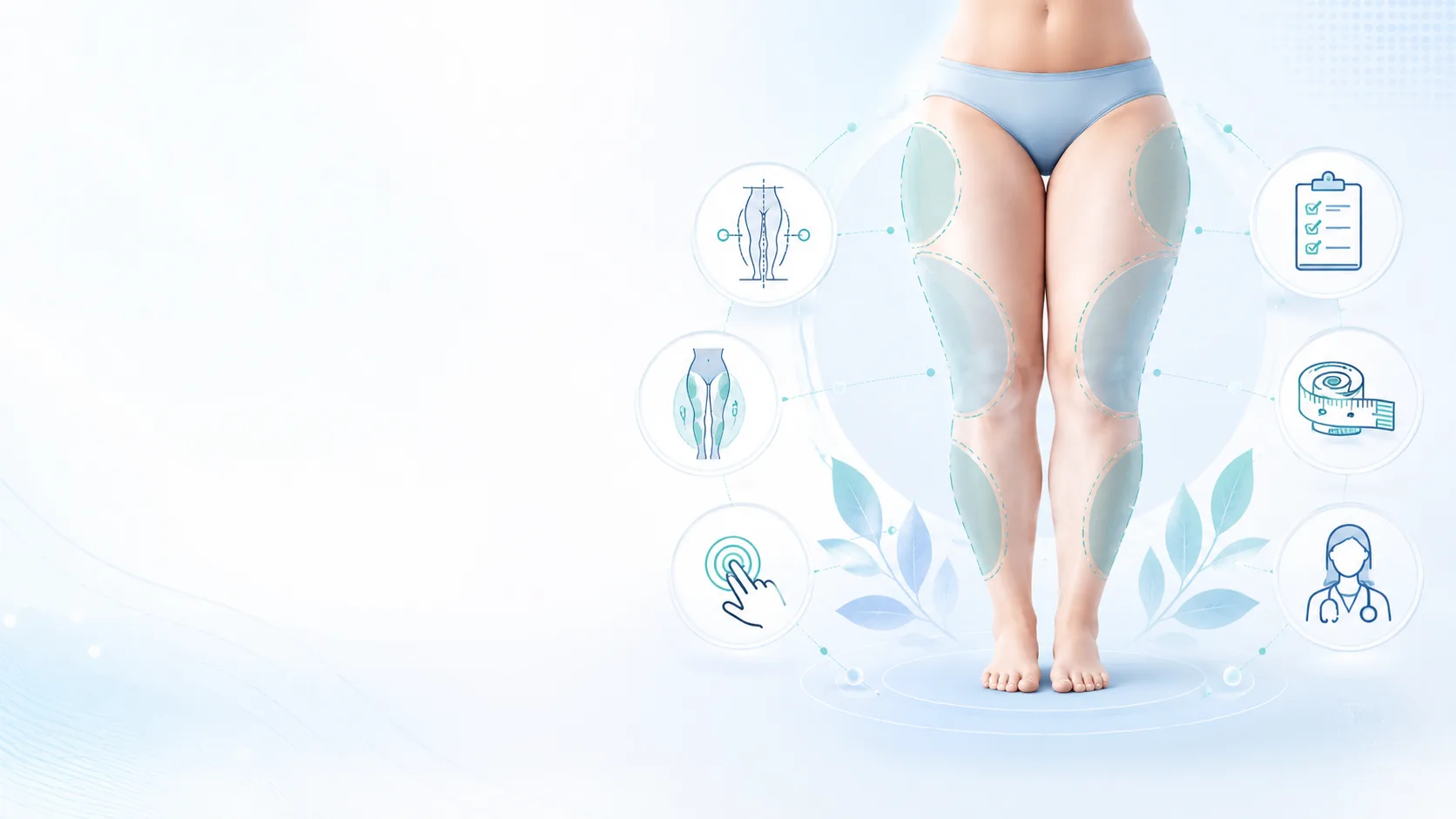
Lipedema and obesity are not the same condition, although they can occur in the same person. Lipedema usually causes symmetrical, painful and tender enlargement of the hips, legs and sometimes arms. Obesity is a broader pattern of excess body fat and is often linked with metabolic risks. The distinction matters because simply saying “lose weight” does not explain pain, easy bruising or the lower body staying resistant to diet. At the same time, not every large leg is lipedema. The first step is to read the symptoms together; when pain, easy bruising, relatively spared feet and symmetrical enlargement appear together, lipedema symptoms provides the clinical frame for a more careful assessment.
Why are lipedema and obesity so often confused?

Both conditions can increase body size. What the patient notices is often “my legs are large,” but the clinical question is different: where is the fat located, is it painful, does bruising occur easily, is there swelling, and how does the body respond to weight loss? Lipedema is not only excess weight. It is a regional, tender and often painful fat distribution disorder. Current guidelines emphasize clinical examination and differential diagnosis in lipedema care (Faerber et al., 2024; Herbst et al., 2021).
In obesity, fat accumulation is usually more generalized and may involve the abdomen, trunk, face, back, arms and legs. In lipedema, the upper body may remain relatively smaller while the hips and legs are more pronounced. Tenderness, easy bruising and a clear mismatch between upper and lower clothing sizes can be important clues. The distinction is not always obvious; this is why lipedema and lymphedema differences is useful not only for lymphedema or venous disease, but also when lipedema and obesity overlap.
Which findings suggest lipedema?
A common patient sentence is: “My upper body changes, but my legs do not.” This does not diagnose lipedema by itself, but it becomes more meaningful when pain, tenderness, easy bruising and symmetrical lower body enlargement are present. Relatively spared feet and a cuff-like transition at the ankles may also be seen in some patients.
- Bilateral and symmetrical leg enlargement
- Pain or tenderness to touch
- Easy bruising
- Lower body responding less to diet
- Feet being less affected than the legs
- Heaviness and fullness after standing
These findings should not be used for self-diagnosis, but organizing them before a medical visit helps. lipedema self-test can support symptom review without replacing a clinical diagnosis.
Which findings suggest obesity?
Obesity usually involves a more generalized increase in body fat. Waist enlargement, visceral fat, high blood pressure, insulin resistance, abnormal blood lipids, sleep apnea and joint overload may become prominent. Obesity is separate from lipedema, but if both are present, symptoms can become heavier. The question is often not “lipedema or obesity,” but “what part of the problem comes from each?”
Obesity can also increase venous and lymphatic load. Leg swelling, evening heaviness and reduced mobility may not be explained by lipedema tissue alone. Obesity, venous disease and lymphatic disease need to be considered together in many patients (Bindlish et al., 2023).
Can lipedema and obesity coexist?
Yes. When they coexist, the picture becomes more complex. Lipedema tissue may remain painful and regionally resistant, while general weight gain increases abdominal, trunk and leg load. Focusing only on the scale can therefore be discouraging. Waist size, trunk fat, leg circumference, pain level, mobility and clothing fit should be followed together.
Two mistakes are common. One patient is told “it is only weight,” and lipedema signs are missed. Another patient attributes all weight gain to lipedema and metabolic risks are ignored. A better approach combines the clinical steps in how lipedema is diagnosed with metabolic assessment.
Does weight loss make lipedema disappear?
Weight loss can improve general health, visceral fat, insulin resistance, joint load and mobility. But lipedema tissue does not always respond in the same proportion, especially when pain and leg volume are considered. Persistent lipedema pain after major weight loss and bariatric surgery has been reported in the literature (Cornely et al., 2022). This does not mean weight management is useless; it means lipedema is not the same mechanism as obesity.
Patients need to hear both parts clearly: weight management matters, but lipedema is not simply a matter of willpower or calories. lipedema and weight loss therefore needs to be understood as a realistic discussion of both metabolic benefits and the limits of lipedema tissue response.
How do insulin resistance and appetite affect this distinction?
Insulin resistance means that body cells do not respond well enough to insulin, the hormone that helps move blood sugar into cells. It can be associated with appetite changes, sweet cravings, sleepiness after meals, waist gain and difficulty losing weight. These findings are not lipedema itself, but they can make the overall picture harder to manage.
Lower-body resistance to diet may suggest lipedema, while a growing waist and blood sugar imbalance require metabolic assessment. lipedema and insulin resistance helps connect the scale with appetite, glucose balance and body composition.
What should patients track in practice?

The scale should not be the only marker. Waist size may improve while weight changes slowly. Pain may decrease before circumference changes. The reverse is also possible: weight drops, but leg pain and tenderness persist.
- Waist and abdominal change
- Hip, thigh, knee and calf circumference
- Pain, tenderness and bruising
- Evening heaviness
- Walking, stairs and exercise tolerance
- Clothing fit and upper-lower body mismatch
- Blood sugar, insulin resistance and thyroid status when relevant
Nutrition does not solve everything, but it supports blood sugar control, bowel regularity and weight management. lipedema nutrition should be seen as metabolic support, not as a diet that “melts” lipedema.
When should a doctor be consulted?
Medical evaluation is useful when symmetrical leg enlargement, pain, easy bruising, spared feet, lower-body resistance to weight loss or a family pattern is present. Sudden one-sided swelling, redness, warmth, shortness of breath or chest pain should not be treated as lipedema; these symptoms require urgent medical assessment.
Practical takeaway
Lipedema is not obesity, and obesity is not just another name for lipedema. They can coexist and make each other harder to manage. The right distinction comes from assessing pain, fat distribution, metabolic health, response to weight loss and venous-lymphatic findings without blaming the patient. Once this is clear, the care plan becomes more realistic and sustainable.
