
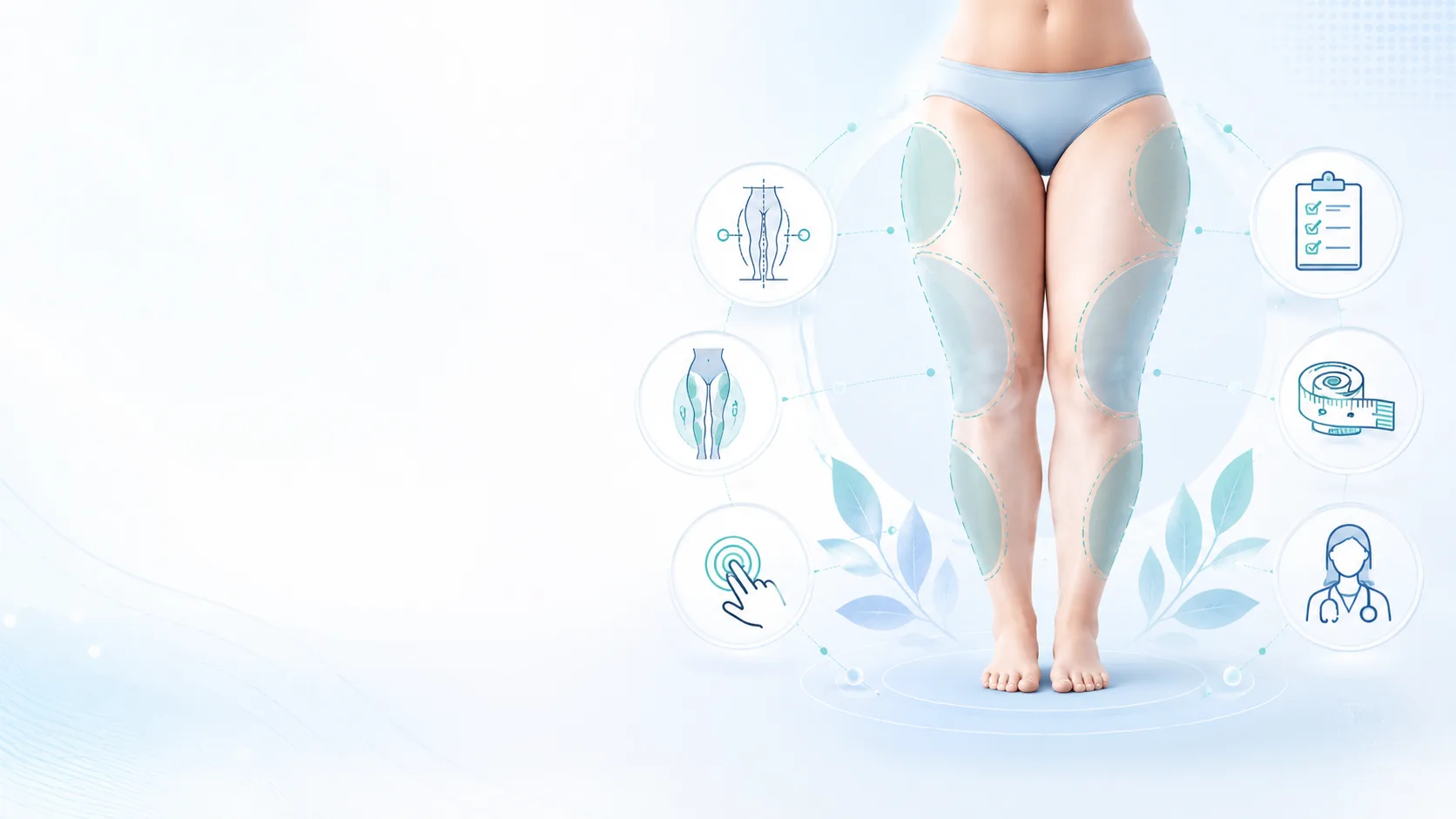
Leg enlargement, heaviness, swelling, pain or an orange-peel skin texture does not point to lipedema alone. Lymphedema, chronic venous insufficiency, cellulite, obesity, thyroid problems and metabolic conditions may create similar complaints. Differential diagnosis means separating conditions that look alike, because each condition needs a different care plan. Lipedema is usually considered when painful, tender, fairly symmetrical fat distribution appears with relative sparing of the feet, but that description alone does not make the diagnosis (Faerber et al., 2024; Herbst et al., 2021).
This article is not a diagnostic checklist. It helps patients describe symptoms more clearly and understand which signs point toward lipedema and which signs need another medical assessment. Sudden one-sided swelling, redness, warmth, shortness of breath or chest pain should not be watched at home.
What pattern suggests lipedema?
Lipedema often causes bilateral, relatively symmetrical enlargement of the legs and sometimes the arms. The tissue may be painful to pressure, easily bruised and sensitive to touch. Relative sparing of the feet and a cuff-like ankle transition may support the suspicion. When pain, bruising and symmetrical enlargement are considered separately, the condition may be dismissed as weight gain; lipedema symptoms places these symptoms into one clinical pattern.
Still, every symmetrical leg shape is not lipedema. Diagnosis is clinical and depends on history, examination and exclusion of similar conditions. Current sources emphasize pain, disproportionate fat distribution, vascular or lymphatic comorbidities and functional complaints together (Kruppa et al., 2020; Faerber et al., 2024).
How is lymphedema different from lipedema?
Lymphedema is related to impaired lymphatic drainage, meaning the system that returns tissue fluid to the circulation cannot clear the load well enough. In lipedema the main issue is fat distribution and pain sensitivity; in lymphedema, fluid accumulation becomes more prominent. It may start on one side, involve the top of the foot and become firmer over time.
Feet are usually spared in lipedema, while the foot and toes can become involved in lymphedema. A positive Stemmer sign can support lymphedema, but patients should not try to confirm this alone. When lymphedema is suspected, management may give more weight to skin care, compression and lymphatic therapy (International Society of Lymphology, 2020).
Why venous insufficiency can look like lipedema
Chronic venous insufficiency means the leg veins do not return blood toward the heart efficiently. Evening heaviness, ankle swelling, varicose veins, itching, skin discoloration and fullness after standing point toward a venous component. Lipedema can also cause heaviness, so the two conditions may mask each other.
Venous Doppler ultrasound does not diagnose lipedema, but it helps answer whether vein reflux or obstruction is present. Varicose veins, one-sided swelling, skin color change or swelling that clearly increases by evening deserve vascular assessment. lipedema and venous insufficiency explains how lipedema and venous disease can coexist in the same patient (De Maeseneer et al., 2022; Bindlish et al., 2023).
Cellulite and lipedema are not the same
Cellulite usually refers to a dimpled orange-peel skin appearance. That appearance alone does not mean lipedema. Lipedema may include skin irregularity, but diagnosis depends more on pain, tenderness, easy bruising, disproportionate fat distribution and foot sparing.
In English, cellulitis means a bacterial skin infection, not cosmetic cellulite. Redness, warmth, fever, rapidly increasing pain or one-sided swelling should be treated as a possible infection or vascular problem rather than a cosmetic skin issue.
How obesity and lipedema differ

Obesity involves a general increase in body fat. Lipedema more often causes disproportionate lower-body fat with pain, tenderness and bruising tendency. A patient may have both obesity and lipedema. In that case, body weight alone does not explain leg pain, clothing mismatch or mobility limits.
Weight loss can improve general health, venous load, insulin resistance and joint stress. However, lipedema tissue may not respond exactly like general body fat. lipedema vs obesity explains the difference between scale weight and disproportionate leg changes (Herbst et al., 2021; Bindlish et al., 2023).
When thyroid, insulin resistance or medication-related edema should be considered
Fatigue, weight gain, constipation, cold intolerance and generalized puffiness may occur with hypothyroidism. Insulin resistance may add cravings, central weight gain, frequent hunger and difficulty with weight management. These are not lipedema, but they can make symptoms more complicated in a person who has lipedema.
Some medications, hormonal changes and kidney, heart or liver disease can also cause leg swelling. Differential diagnosis should not be based on leg appearance alone. Blood tests, medication history, vascular assessment and specialist input may all be needed. how lipedema is diagnosed organizes this process step by step.
Which signs suggest something urgent?
Lipedema may be chronic, but every new leg complaint should not be explained by lipedema. Sudden one-sided swelling, new severe calf pain, marked redness or warmth, shortness of breath, chest pain, faintness or fever requires medical attention.
How to prepare for a doctor visit

It helps to note when symptoms started, whether they changed with puberty, pregnancy, menopause or weight change, whether family members have a similar body shape, how bruising and pain behave, whether the feet swell and how symptoms change during the day. lipedema self-test should be viewed as a way to organize findings before a medical visit, not as a diagnostic tool.
If varicose veins, evening swelling or vascular signs are prominent, vascular surgery may be the right entry point. If foot involvement and persistent fluid load are present, a lymphedema-focused team may be needed. which doctor to see for lipedema helps connect the main complaint with the appropriate first assessment.
What should patients take away?
The key is not to rely on a single sign. Symmetrical enlargement, pain, easy bruising and spared feet may support lipedema; swelling on the foot suggests lymphedema; varicose veins and evening ankle edema suggest venous disease; redness and warmth may point to an urgent problem.
The care plan changes with the diagnosis. Some patients mainly need nutrition, movement, manual lymph drainage and compression and compression; others need vascular, thyroid, metabolic or lymphatic assessment as well.
