

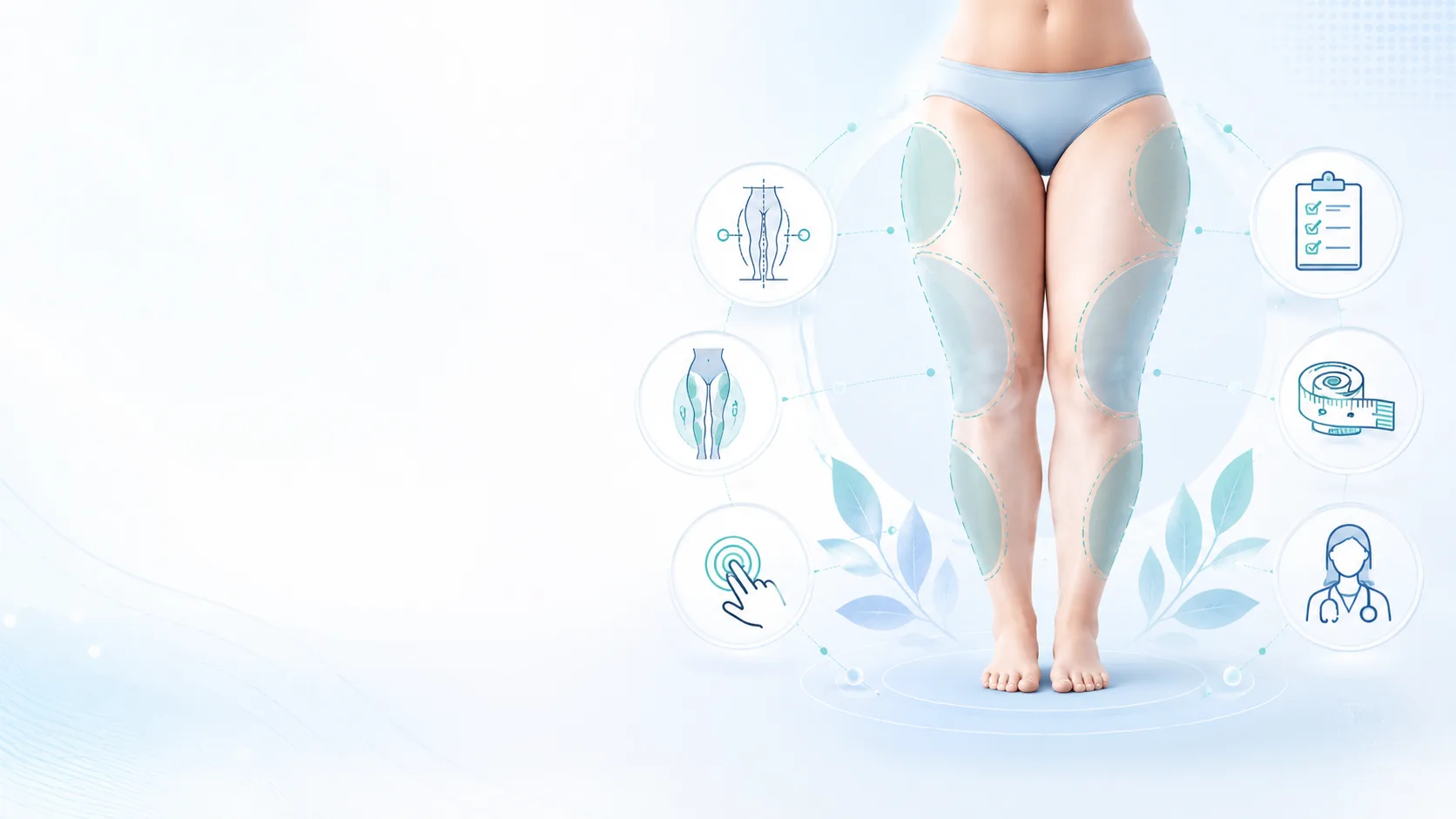
In summer, people with lipedema may feel more heaviness, fullness, tenderness and a swelling-like sensation in the legs. This does not always mean that lipedema tissue is suddenly growing. Heat widens blood vessels, increases skin blood flow, may worsen venous pooling, changes fluid and electrolyte balance through sweating, and often comes with travel or long periods of standing. The practical goal is to manage circulation, muscle pump activity, compression, hydration and cooling together.
Why does heat make the legs feel heavier?
When the body is hot, blood vessels near the skin dilate to help release heat. In people who stand for long hours, have venous symptoms or already have painful sensitive tissue, this can increase heaviness and fullness. Venous insufficiency means that the leg veins struggle to return blood efficiently to the heart.
Lipedema should not be understood as a simple edema disease. The S2k guideline describes lipedema as a painful condition of subcutaneous tissue in which symptoms, disproportion and tissue sensitivity matter (Faerber et al., 2024). But in hot weather, venous pooling, sweating, salt-mineral shifts and inactivity can add a swelling sensation on top of the lipedema pattern.
Is it true edema or a lipedema sensation?
Sometimes swelling means real fluid that leaves a pit when pressed. Sometimes it is tissue tightness, pain and fullness. If both legs feel similarly heavy toward the end of the day and improve with cooling, leg elevation, walking or compression, heat-related circulation load may be part of the picture.
Sudden one-sided swelling, a hot red leg, severe new calf pain, breathlessness or chest pain should not be blamed on lipedema. lipedema and lymphedema differences is important because venous disease, lymphedema, thrombosis, medication-related edema and heart, kidney or liver causes need different evaluation.
Does sweating reduce edema?
Sweating may give temporary relief, but it is not edema treatment. Sweat contains water and electrolytes, especially sodium. Electrolytes are minerals that support nerve, muscle and fluid balance. Drinking a lot of plain water after heavy sweating may not be enough for some patients and can leave them tired or weak.
Summer hydration should therefore include timing, minerals, food quality and symptoms. This is especially relevant in low-carb or ketogenic phases. lipedema nutrition and coffee and tea intake in lipedema help organize food, fluids, coffee, tea and daily rhythm more realistically.
Why is compression harder but still useful?
Compression can feel difficult in heat because of sweating, itching and skin friction. Still, in the right patient, properly fitted compression used early in the day may reduce heaviness and tissue tension. Czerwińska et al. (2024) reported improvements in heaviness, swelling sensation and quality-of-life measures when compression was combined with exercise in patients with lipedema.
The key is not to treat compression as punishment. Morning use, dry skin, breathable summer options, planned use during travel and careful skin care often make it more tolerable. manual lymph drainage and compression places compression, manual lymph drainage and skin care in the same practical frame.
Why should exercise timing change in summer?
Exercise at the hottest hour can increase fatigue, palpitations and tissue sensitivity. Early morning, evening or water-based activity is usually better tolerated. The pressure of water acts like gentle external support, which can reduce heaviness in some patients.
Movement in lipedema is not only about calories. Calf muscle contractions support venous return and lymphatic flow. Short walks, ankle pump movements, gentle resistance work and movement breaks during long sitting are especially useful in summer. lipedema exercises helps keep this joint-friendly and realistic.
How can summer meals affect swelling sensation?
Summer often brings cold drinks, salty snacks, fruit, late meals and more eating outside. One item is rarely the whole problem; the cumulative effect may show up as morning heaviness, ring tightness, leg fullness or cravings. If insulin resistance is present, glucose swings can also affect fatigue and appetite. lipedema and insulin resistance gives the broader metabolic context.
Fruit portions also matter. Watermelon, melon, grapes and figs can be refreshing, but large portions may add a fast sugar load. A small portion after a protein-containing meal is usually more stable than a large fruit plate late at night.
Can menopause make summer symptoms feel stronger?
Hot flashes, night sweating, sleep disruption and central weight change can make summer more difficult during menopause. Poor sleep can lower the pain threshold and make the same legs feel heavier. lipedema and menopause connects hormone change, swelling sensation, weight management and movement planning.
A calmer summer strategy
A useful summer routine is usually made of small adjustments: move during cooler hours, use short walking breaks, pump the ankles during long sitting, choose lukewarm rather than very hot showers, elevate the legs briefly in the evening, and plan compression before swelling builds. Skin care also matters, because sweat, friction and irritation can reduce compression tolerance.
In short, summer management is not about forcing the body into stricter control. It is about reducing the extra circulation and fluid load created by heat. Cooling, movement, compression, hydration, minerals, simple meals and medical review when symptoms are unusual are all parts of the same plan.