

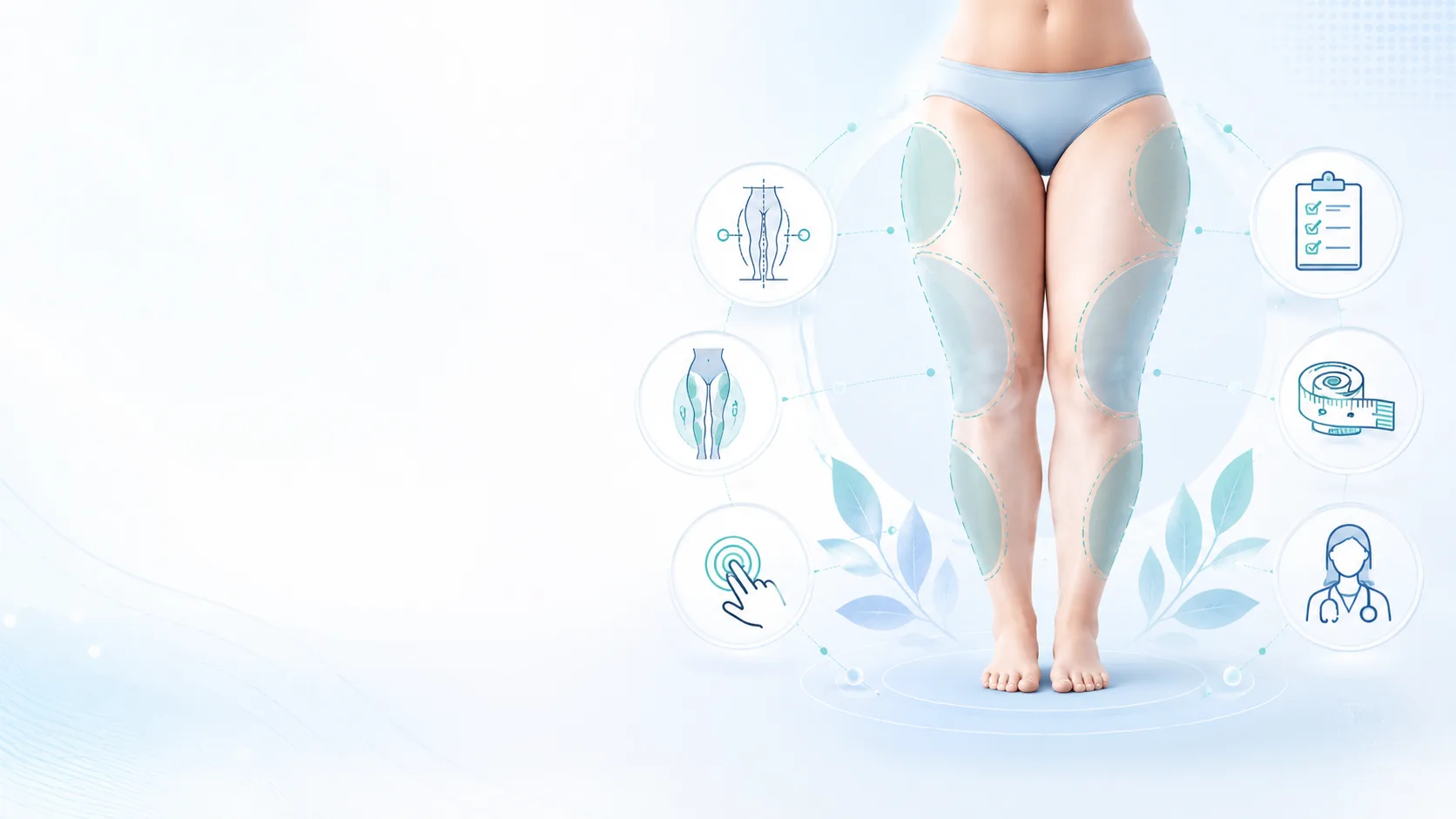
Lipedema often looks like a disease of leg fat, but the patient’s real symptom pattern is usually broader. Chronic venous disease, lymphedema, obesity, insulin resistance, hypothyroidism or Hashimoto’s, PCOS, hypermobility, fibromyalgia-like pain, migraine, poor sleep, constipation and psychological burden can coexist with lipedema or mimic parts of it. The safest message is not “everything is lipedema”; it is to identify overlapping mechanisms and treat the fixable parts without blaming the patient.
Why should lipedema be assessed as a whole-body clinical picture?
Lipedema is usually recognized by pain, tenderness, easy bruising, symmetrical enlargement and relative sparing of the feet. Yet heaviness, swelling sensation, fatigue, weight gain and joint pain can come from other systems too. Current standards and consensus documents emphasize the need for clear diagnosis, multidisciplinary assessment and attention to overlapping conditions (Herbst et al., 2021; Kruppa et al., 2026).
In practical terms, the question is not only “is this lipedema?” but also “what else is increasing the patient’s load?”. what lipedema is gives the core frame, while this article expands it into venous, lymphatic, metabolic, endocrine, connective tissue and pain-related layers.
Is there one common root?
No single proven root explains all associated conditions. The more realistic model is a shared vulnerability: adipose tissue, loose connective tissue, microcirculation, lymphatic load, hormones, metabolic stress and pain sensitivity may interact. Cohort studies support this broad view. Ghods et al. (2020) reported increased obesity, hypothyroidism, migraine and depression. Luta et al. (2025) found comorbidities in 92.1% of 381 women, with chronic venous disease in 86.2% and obesity in 51.7%. Patton et al. (2024) reported altered glucose metabolism in 34% and described chronic venous disease, autoimmune thyroiditis and PCOS among relevant findings.
What does inflammation mean here?
Inflammation means that the body’s alarm and repair system is active. Short-term inflammation can help healing. Low-grade, persistent inflammatory signaling can make pain, tissue sensitivity, fatigue and metabolic stress more noticeable. In lipedema, inflammation should not be presented as the only cause, but it may be one part of the tissue environment, especially when pain, fibrosis and metabolic load coexist (Patton et al., 2024).
For patients, the useful approach is not vague detox language. It is sleep, blood sugar stability, bowel rhythm, low-impact movement, stress regulation and weight-neutral metabolic care.
Chronic venous disease
Chronic venous disease means that the leg veins do not return blood efficiently. It may cause varicose veins, evening heaviness, ankle swelling, skin discoloration and burning. Because lipedema also causes heaviness and discomfort, the two are easily confused. When veins, swelling and skin changes are present, lipedema and lymphedema differences becomes a safety tool rather than a theoretical comparison.
Lymphedema and lipo-lymphedema
Lymphedema is swelling caused by reduced lymphatic transport. Lipedema usually spares the feet, while lymphedema may involve the foot, leave pitting edema and become firmer over time. Not every lipedema patient has lymphedema, but obesity, venous disease and reduced mobility may increase lymphatic load. manual lymph drainage and compression explains why compression, skin care and lymphatic support may be useful for selected symptoms.
Obesity and insulin resistance
Obesity does not cause lipedema, but it can increase joint load, venous and lymphatic pressure, fatigue and inflammatory burden. Insulin resistance means that cells respond poorly to insulin; this may worsen cravings, waist gain and energy swings. The key is to avoid blame while still treating metabolic risk. lipedema vs obesity helps patients separate resistant lipedema tissue from general metabolic weight load.
Thyroid disease and Hashimoto’s
Hypothyroidism does not cause lipedema, but it can add fatigue, constipation, cold intolerance, hair loss, weight gain and swelling sensation. Ghods et al. (2020) and Patton et al. (2024) both make thyroid problems relevant in lipedema cohorts. lipedema and thyroid problems is the natural next step when fatigue, constipation or unexplained weight change dominates the story.
PCOS and hormonal-metabolic overlap
PCOS can involve irregular ovulation, androgen-related symptoms, acne, hirsutism, insulin resistance and weight-management difficulty. Patton et al. (2024) reported a higher prevalence of PCOS than expected. This does not prove causality, but it does mean that menstrual irregularity, acne, hirsutism and carbohydrate cravings should not be ignored in a patient with lipedema. lipedema and menopause also shows why hormonal transitions can change symptom perception.
Hypermobility and connective tissue vulnerability
Hypermobility means that joints move beyond the usual range. In some patients it is only flexibility; in others it comes with ankle sprains, knee instability, pain, low muscle tone and exercise intolerance. Fiengo and Sbarbati (2025) reported current joint hypermobility in 44% of patients with lipedema and childhood hypermobility recall in 60%. Kruppa et al. (2026) also notes possible connective tissue links, while emphasizing the need for stronger evidence. Exercise should therefore support stability, not punish the patient. lipedema exercises fits this logic.
Fibromyalgia-like pain and rheumatologic confusion
Fibromyalgia is a chronic pain sensitivity syndrome with widespread pain, fatigue, sleep problems and cognitive fog. Lipedema pain is usually more regional, pressure-sensitive and related to affected tissue. When both coexist, the pain map becomes harder to read. Cagliyan Turk et al. (2024) reported that more than one in three patients with lipedema may have fibromyalgia syndrome, with negative effects on anxiety, depression and quality of life. lipedema pain helps separate lipedema pain from generalized pain patterns.
Migraine, sleep and psychological burden
Delayed diagnosis, fat-shaming, pain and reduced mobility can produce a large psychological burden. Migraine and depression were highlighted by Ghods et al. (2020), and anxiety/depression were important in the Swiss cohort (Luta et al., 2025). Poor sleep lowers pain tolerance; pain reduces movement; lower movement can worsen fatigue and swelling sensation. This is not a willpower problem; it is a clinical loop.
Bowel rhythm and constipation
Constipation matters because it changes comfort, appetite, abdominal pressure and adherence to nutrition plans. Hypothyroidism, low fluid intake, low fiber, stress and reduced movement can all contribute. lipedema constipation turns this into a practical daily management issue rather than a minor complaint.
Practical takeaways
- Do not explain every symptom as lipedema, but do not dismiss lipedema when other conditions coexist.
- Track pain, waist, leg measurements, bowel rhythm, sleep, energy and mood together.
- Venous disease, lymphedema, thyroid disease, insulin resistance, PCOS and hypermobility may need separate assessment.
- Improving one link can make the others easier: better sleep may reduce pain, better glucose stability may reduce cravings, stronger muscles may reduce joint and lymphatic load.
- No single supplement, diet or exercise method is a cure; combined, realistic care works better.
How can self-test help?
Forum language often reveals confusion: “my legs are swollen”, “I have thyroid disease”, “my joints are too flexible”, “I hurt everywhere”. lipedema self-test does not diagnose lipedema, but it can help patients organize pain, symmetry, bruising, spared feet and weight-resistant changes before seeing a clinician.
When to seek urgent care
Sudden one-sided leg swelling, new severe calf pain, a hot red leg, chest pain, breathlessness, fainting, unexplained fever, marked joint swelling or new neurological symptoms should not be attributed to lipedema. Lipedema should be managed as part of a broader medical picture.