

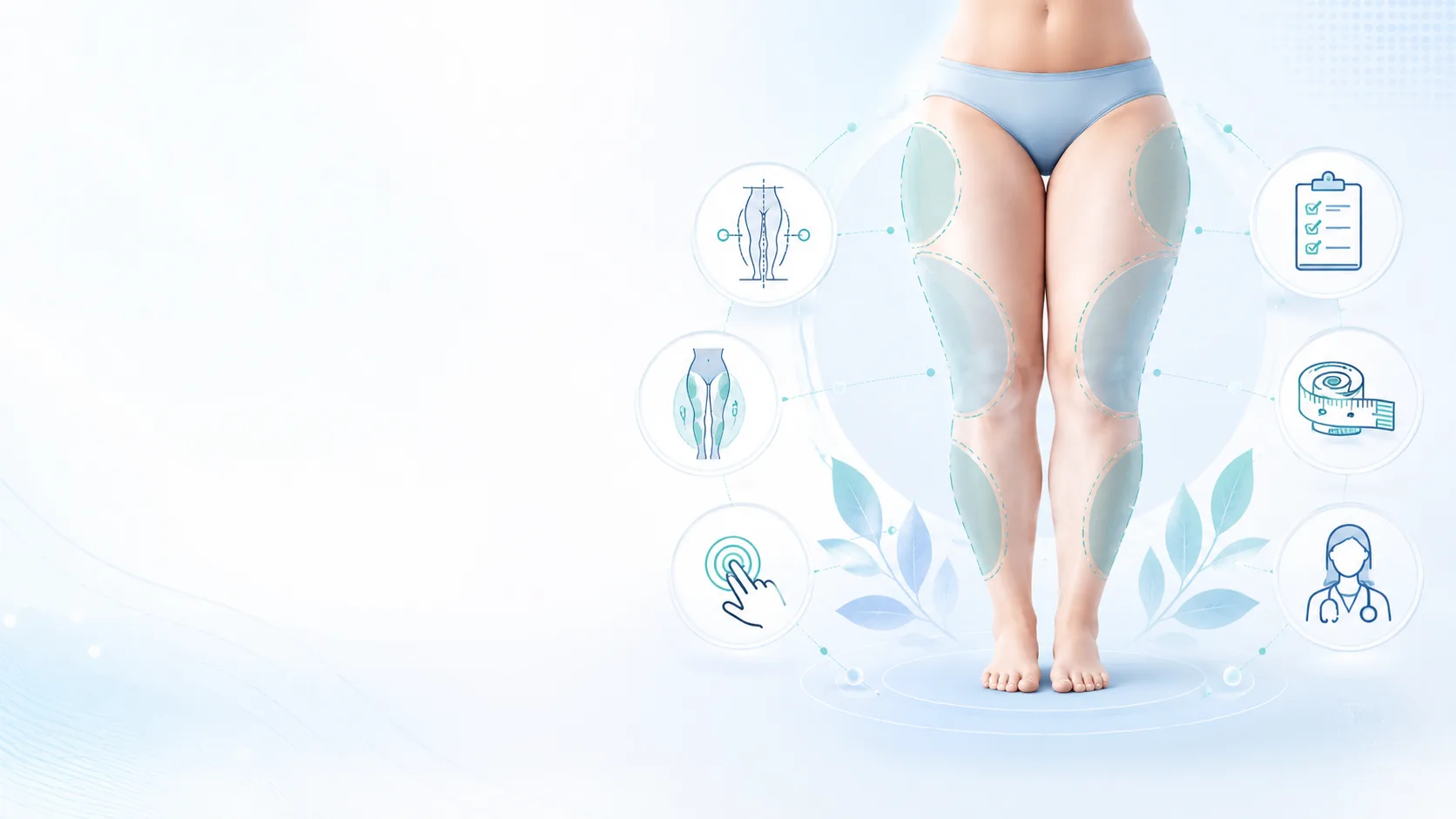
Lipedema and venous insufficiency are not the same disease; however, they can be seen together in the same patient and can make each other's complaints more pronounced (Bindlish et al., 2023). Lipedema is more often thought of as painful, sensitive, symmetric fat tissue increase, with relatively preserved feet. Venous insufficiency, on the other hand, manifests as increased heaviness, varicose veins, swelling around the ankles, and skin changes at the end of the day due to the poor ability of the venous valves to carry blood back to the heart. This distinction is important enough that the patient cannot be evaluated solely by the sentence "my legs are swollen."
Why do lipedema and venous insufficiency get confused?
In both conditions, the patient may describe fullness, heaviness, and sensitivity in their legs. In lipedema, pain upon touch, easy bruising, symmetric thickening, and difficulty in reducing the lower body through dieting are more prominent. In venous insufficiency, complaints often worsen with prolonged standing, become more pronounced towards the evening, and may partially relieve when the legs are raised. The patient may experience both conditions simultaneously; therefore, lipedema symptoms serve not only as a list but also as a clinical starting point to differentiate from venous-related complaints.
What exactly is venous insufficiency?
Venous insufficiency is the inability of the valves within the leg veins to transport blood upwards towards the heart effectively. When blood starts to pool below, the intravascular pressure increases. Over time, this pressure can lead to varicose veins, end-of-day swelling, darkening of the skin around the ankles, itching, eczema, and an increased risk of ulceration in advanced cases. Chronic venous disease guidelines emphasize the importance of clinical examination, CEAP classification, and venous Doppler ultrasound in appropriate patients for assessment (De Maeseneer et al., 2022).
Does lipedema cause venous insufficiency?
It cannot be said that lipedema directly causes venous insufficiency. A more accurate expression is that in a patient with lipedema, additional factors such as leg volume, immobility, weight gain, pregnancies, hereditary predisposition to varicose veins, or prolonged standing at work can increase venous load. Thus, the vascular problem is not the same as lipedema itself; but it can exacerbate the complaints by overlapping in the same body. This distinction demonstrates why the fundamental answer to the question what is lipedema alone is insufficient in daily examinations.
What findings are in favor of lipedema?
The presentation suggesting lipedema is typically bilateral and symmetric. The hips, buttocks, thighs, knee area, calves, or arms may be affected; while the feet are often relatively spared. Touching the legs may be uncomfortable, bruising may occur with minor impacts, and the patient may report, "even if I lose weight, my legs remain the same." These findings do not alone lead to a diagnosis; however, the logic of clinical examination explained within how is lipedema diagnosed necessitates thinking alongside vascular examination.
What findings are in favor of venous insufficiency?

Swelling that markedly increases in the evening, legs that become full after prolonged standing, prominent varicose veins, brown discoloration around the ankles, itching, venous eczema, and a history of leg ulcers are more prominent from the perspective of venous insufficiency. If the swelling particularly extends down to the ankles and the tops of the feet, explaining it solely with lipedema tissue may be insufficient. In such cases, the difference between lipedema and lymphedema raises the patient's question of "is it edema, lipedema, lymphedema, or vascular?" to a more reliable framework.
When is Doppler ultrasound necessary?
Venous Doppler ultrasound is a painless imaging method that evaluates evidence of leakage, valve insufficiency, or obstruction in the veins. It does not diagnose lipedema alone; however, if accompanied by venous insufficiency, a history of thrombosis, or significant suspicion of varicosities, it alters the treatment plan. Current lipedema guidelines emphasize that imaging is not a test that proves lipedema but a tool that helps differentiate confounding or accompanying conditions (Faerber et al., 2024; Kruppa et al., 2020).
Does compression work the same in both cases?
A compression garment does not dissolve lipedema fat tissue. Nevertheless, it may provide relief in some patients if there is venous load, end-of-day tension, or slowed lymphatic flow. In venous insufficiency, compression is a more central tool for managing intravascular pressure and edema; in lipedema, however, it often becomes part of a broader conservative plan aimed at managing pain, fullness, and tissue tension. Manual lymph drainage and compression are therefore important not just for the "wear socks" recommendation, but for the patient to understand which support they are using for which complaint.
Does varicose vein treatment resolve lipedema?
No. Treatment for varicose veins or venous insufficiency does not eliminate lipedema fat tissue. However, if the patient has true venous insufficiency, treating the venous aspect may reduce end-of-day swelling, heaviness, varicose pain, or skin changes. The patient should not confuse two separate expectations here: venous treatment can reduce vascular load, whereas nutrition, exercise, compression, lymphatic support, and surgical decision-making in appropriate patients are separate considerations for the painful fat tissue of lipedema (Herbst et al., 2021; De Maeseneer et al., 2022).
What should the patient review in practice?

- If swelling does not change much from morning to night and pain is pronounced upon touching, lipedema is considered more likely.
- If swelling noticeably increases in the evening and decreases when the legs are raised, venous or fluid edema should also be questioned.
- If there are varicose veins, brown discoloration around the ankles, itching, or a history of ulcers, a vascular examination should not be postponed.
- If the tops of the feet and toes are notably swollen, additional evaluation for lymphedema or a mixed picture should be conducted.
- The self-test result is not a diagnosis; however, lipedema self-test findings can be used to regularly note symptoms and prepare better for consultation.
When is a cardiovascular surgical evaluation necessary?
In a patient suspected of having lipedema, a significant presence of varicose veins, unilateral dominant swelling, swelling that increases in the evening, color changes around the ankles, a past history of thrombosis, or leg ulcers makes cardiovascular surgical evaluation especially significant. This consultation is not done to exclude lipedema but to accurately assess the vascular load in the same patient. Therefore, the question which doctor to consult for lipedema is not just a matter of specialty choice but about establishing the correct sequence to avoid missing a diagnosis.
Findings requiring emergency evaluation
Sudden unilateral leg swelling, newly onset severe calf pain, warmth-redness in the leg, shortness of breath, chest pain, or feelings of faintness should not be explained by lipedema. These findings may be associated with thrombus, infection, or other emergencies. Even in a patient diagnosed with lipedema, any rapid changes that develop newly and unilaterally require immediate medical evaluation.
In short
Lipedema and venous insufficiency are two separate conditions with different mechanisms; however, they can occur together in the same patient. Lipedema is evaluated mostly with painful, symmetric fat tissue increase that relatively spares the feet; venous insufficiency is assessed with increased swelling at the end of the day, varicose veins, skin changes, and Doppler findings. A good plan considers lipedema, the vascular system, lymphatic load, weight-metabolism, and daily living factors together rather than searching for a "single diagnosis."
