

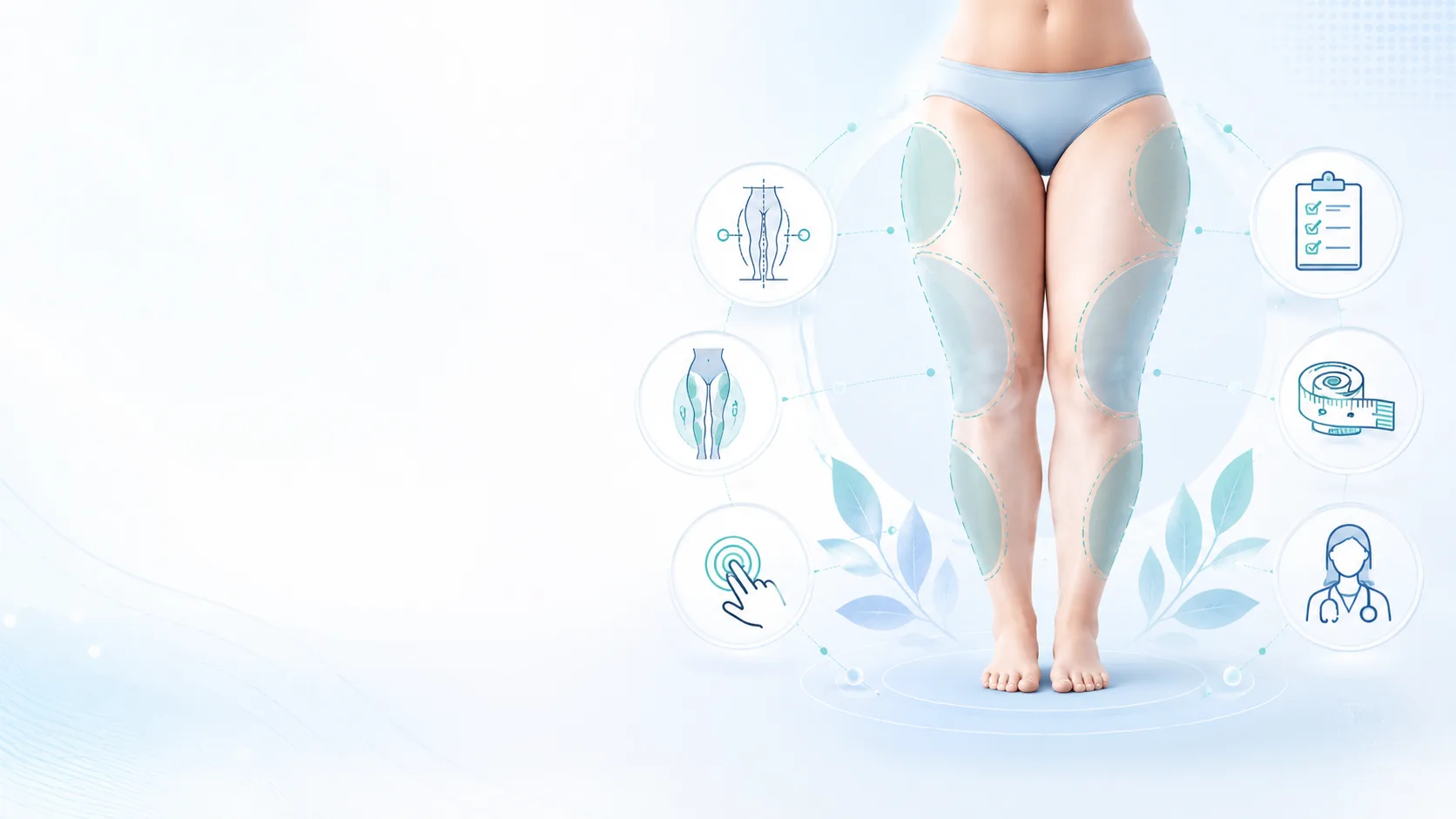
Pain in lipedema often begins as tenderness in the legs, easy bruising, heaviness and pressure. Some patients, however, describe pain that spreads to the shoulders, back, hips, arms or the whole body. This raises the question of fibromyalgia-like widespread pain. Fibromyalgia is a chronic pain syndrome associated with widespread pain, fatigue, sleep disturbance, brain fog and tenderness. It is not the same as lipedema, but the two can coexist or resemble each other in some patients (Angst et al., 2021; Turk et al., 2024).
The point is not to blame the patient, but to build a better plan. If clinicians focus only on lipedema tissue, they may miss widespread pain, sleep disruption and nervous system sensitivity. If every widespread pain complaint is called fibromyalgia, the typical lipedema pattern in the legs may be missed.
Are lipedema pain and fibromyalgia pain the same?

No. Lipedema pain is often felt as subcutaneous tissue tenderness, pain with pressure, bruising tendency, heaviness and fullness in the legs. Fibromyalgia pain is usually more widespread, shifting and associated with sleep disturbance and cognitive clouding. Angst et al. (2021) emphasized both shared and contrasting features between fibromyalgia and lipedema. lipedema symptoms should therefore include questions about where the pain is located.
Can they coexist?
Yes. Turk et al. (2024) evaluated 354 people with lipedema and reported that 124 participants, about 35%, met 2016 fibromyalgia criteria. Those meeting fibromyalgia criteria had higher anxiety and depression scores and lower physical and mental quality-of-life scores. Çakıt et al. (2023) also reported that 21 of 53 women with lipedema met fibromyalgia criteria, and pain and quality-of-life burden were greater when both conditions were present.
Why lipedema awareness matters in fibromyalgia
The overlap works both ways. Bolkan Günaydın et al. (2025) evaluated 100 women with fibromyalgia and observed lipedema in 50% of them. This does not mean every fibromyalgia patient has lipedema, but it suggests that painful, symmetrical, foot-sparing fat distribution should be checked in women with widespread pain. conditions mistaken for lipedema helps keep this differential thinking clear.
What is central sensitization?
Central sensitization means the nervous system has become more sensitive to pain signals. Touch, pressure or movement that would not normally hurt may feel painful. Nijs et al. (2018) described links between sleep disturbance, chronic pain, stress and pain sensitivity. In lipedema, tissue pain may be real and local; over time, poor sleep and stress can add a nervous system layer to the pain experience.
Sleep, fatigue and brain fog
Fibromyalgia-like pain often comes with sleep disturbance and brain fog. Brain fog means reduced mental clarity, poor focus or forgetfulness. Lipedema pain can also disturb sleep, and poor sleep can lower pain threshold the next day. lipedema and sleep disturbance is therefore a key companion topic, especially when patients wake tired or feel mentally unclear.
Hypermobility may add another layer
Joint hypermobility can make muscles and tendons work harder to control movement. If hypermobility coexists with lipedema, mechanical pain around the knees, hips, lower back and ankles may be added to tissue tenderness. lipedema and hypermobility helps adapt exercise and recovery planning.
Clues that suggest a fibromyalgia-like pattern
Pain that is not limited to the legs, pain spreading to the shoulders, back, neck or arms, whole-body tenderness, sleep disturbance, morning fatigue, brain fog, headache, irritable bowel-like symptoms, stress-sensitive flares and long recovery after activity may suggest a fibromyalgia-like pain pattern. When pain is mainly in the subcutaneous leg tissue with bruising and pressure tenderness, lipedema tissue may be the dominant driver. lipedema diagnosis methods provides the safer clinical frame.
What changes in care?
If widespread fibromyalgia-like pain is present, care should not focus only on tissue swelling. Sleep rhythm, graded exercise, pain education, stress regulation, psychological support, physical therapy and sometimes rheumatology or pain medicine may be needed. Exercise should be tolerable and gradual rather than punishing. lipedema exercises and manual lymph drainage and compression should be adapted to pain type and recovery capacity.
In practical terms
Widespread pain, morning fatigue, poor sleep and brain fog in a person with lipedema are not imaginary. A fibromyalgia-like pain cycle may coexist with lipedema. Likewise, a woman with fibromyalgia and painful, symmetrical, foot-sparing leg fat should be assessed for lipedema. The safest approach is to evaluate tissue tenderness, nervous system sensitivity, sleep, emotional burden and movement capacity together.