

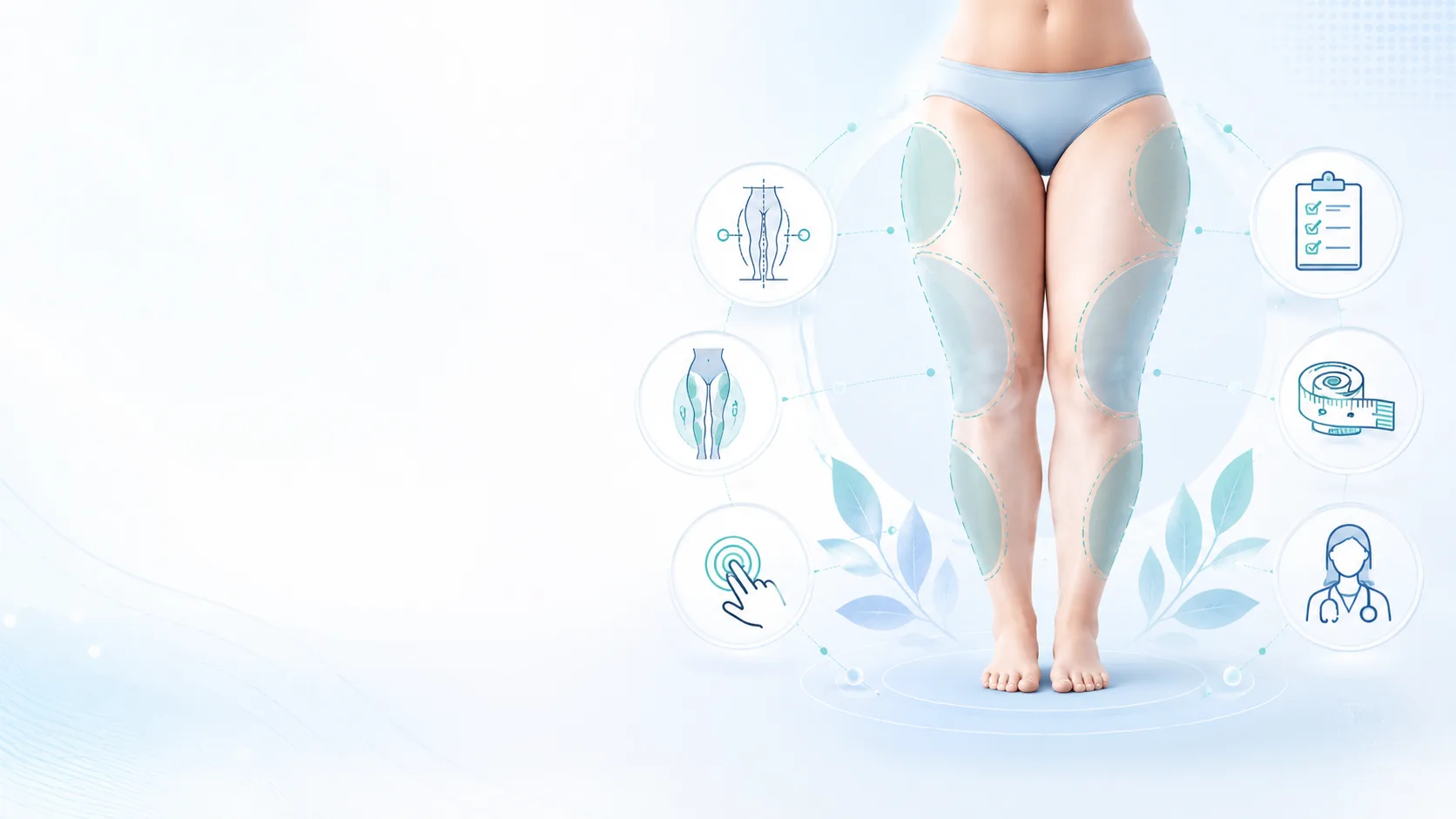
Not every leg swelling, large calf or lower-body fullness is lipedema. Lipedema is suspected when pain, tenderness to touch, easy bruising, usually symmetrical fat distribution, relative foot sparing and lower-body resistance to weight loss appear together. Obesity, lymphedema, venous insufficiency, thyroid disease, cellulite and systemic edema can look similar. The purpose is not self-diagnosis, but a clearer reading of what each sign may suggest (Faerber et al., 2024; Mortada et al., 2025).
Does every online symptom mean lipedema?

No. Online content often reduces lipedema to leg size. Diagnosis is broader: pain, bruising, distribution, foot involvement, edema pattern and vascular or lymphatic findings matter. Reviews describe obesity, lymphedema and venous insufficiency as frequent sources of confusion (Peled & Kappos, 2016; Mortada et al., 2025). Without that frame, lipedema symptoms can be misread as a self-diagnosis checklist.
Obesity or lipedema?
In obesity, fat gain is often more generalized and may involve the abdomen, trunk and upper body. Lipedema tends to affect the lower body more, may spare the feet and can be painful to touch. The two can also coexist. A clinical statement on obesity, venous disease, lymphatic disease and lipedema emphasizes this overlap in real patients (Bindlish et al., 2023). lipedema vs obesity helps separate weight pattern from painful lipedema tissue.
Can lymphedema look like lipedema?
Yes. Lymphedema is swelling caused by impaired lymph drainage. Pitting edema, swelling on the top of the foot, skin thickening, infections and a strong one-sided difference point more toward lymphedema. The International Society of Lymphology highlights history, examination and supportive testing when needed (International Society of Lymphology, 2020). Because lipedema and lymphedema may also coexist, lipedema, lymphedema and venous insufficiency differences is a practical safety step.
Venous insufficiency and varicose veins
Venous insufficiency means the leg veins do not return blood efficiently. Evening swelling, ankle fullness, varicose veins, itching, brown skin discoloration and heaviness after standing may appear. Lipedema can also cause heaviness, so the two may be confused or occur together (Bindlish et al., 2023; Mortada et al., 2025). When a patient says the legs collapse toward evening, lipedema and venous insufficiency keeps the venous side of the story in view.
Cellulite, lipohypertrophy and normal body shape
Cellulite is a common surface skin change with an orange-peel appearance; it is not the same as lipedema when pain, easy bruising and a typical fat pattern are absent. Lipohypertrophy can mean symmetrical, usually painless fat enlargement. Some people also naturally carry more lower-body fat because of family body shape or muscle structure. lipedema vs obesity also helps in these gray zones.
Thyroid, heart, kidney disease and medication-related edema
Thyroid disease, heart failure, kidney disease, liver disease and some medications may cause fluid retention. This swelling may change during the day, involve the feet, cause rapid weight fluctuation or appear with breathlessness or fatigue. Lipedema is primarily suspected from painful adipose tissue distribution, not from every type of fluid retention (Faerber et al., 2024; Peled & Kappos, 2016). If fatigue, constipation, weight change and edema feeling dominate, lipedema and thyroid problems becomes a relevant clinical bridge.
Red flags that should not wait
Sudden one-sided swelling, new severe calf pain, warmth and redness, shortness of breath, chest pain, fainting, fever or rapidly worsening pain should not be explained away as lipedema. These signs may relate to thrombosis, infection or heart-lung emergencies.
How to prepare for a medical visit
Write down when symptoms started, whether they change during the day, whether both legs are similar, whether the feet swell, whether bruising and tenderness occur, medication use, weight change and family history. lipedema diagnosis methods explains where examination, Doppler ultrasound and other tests fit. lipedema self-test can help organize observations, but it does not diagnose.
In practical terms
Lipedema is real and often recognized late, but not every leg swelling is lipedema. Obesity, lymphedema, venous insufficiency, cellulite, thyroid disease, medication-related edema and rarer fat disorders may look similar. The safest path is to assess pain, bruising, symmetry, foot involvement, daily variation and related medical conditions together, then confirm the picture with a clinician.