

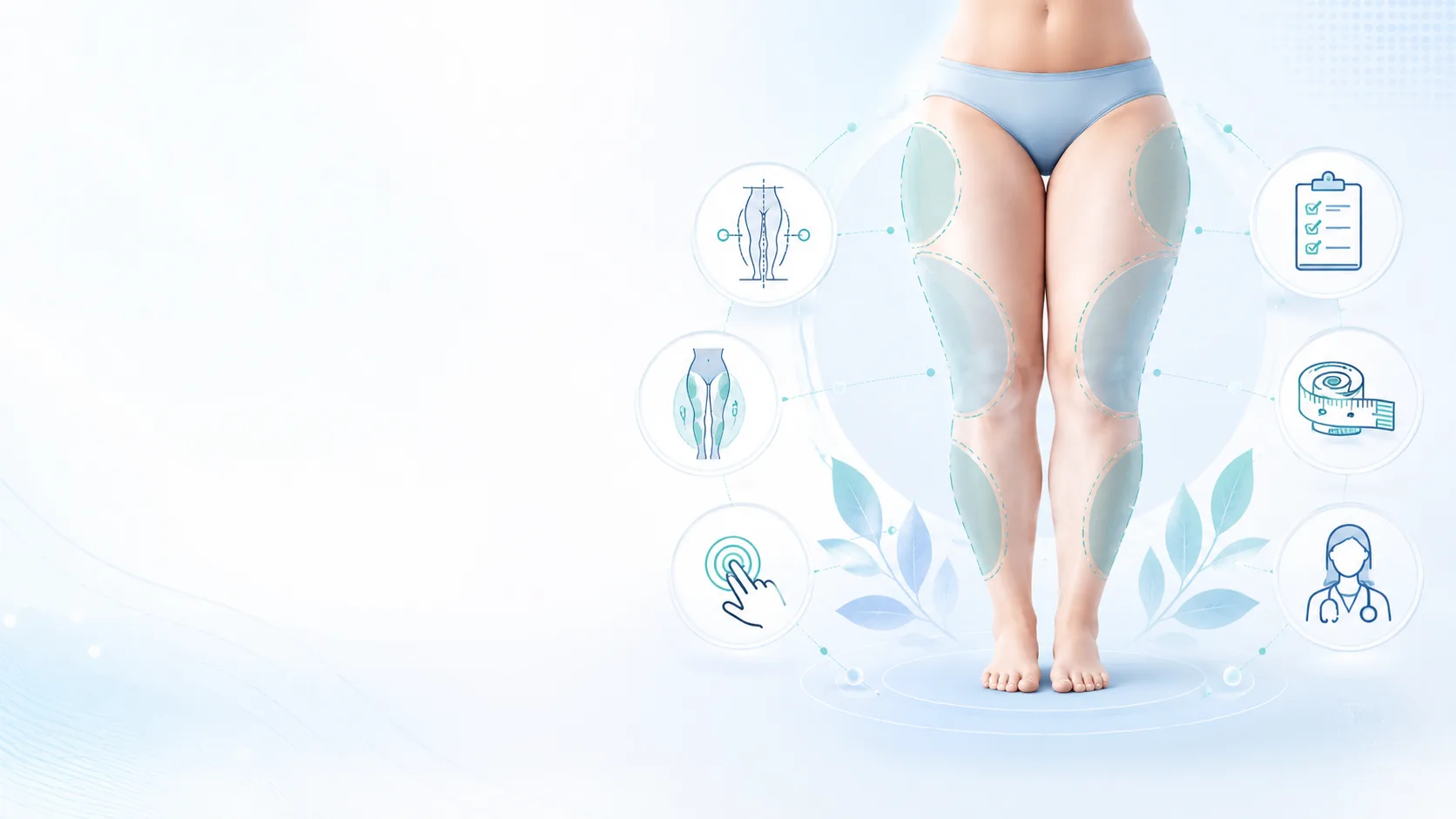
Leg swelling is a complaint that can be seen in lipedema; however, not every leg swelling is lipedema. If there is increased heaviness in the evening, marked indentation around the ankle, sudden unilateral swelling, varicose veins, skin color changes, shortness of breath, or calf pain, the situation may be related to another cause. Lipedema is primarily considered when there is symmetrical thickening of the lower body, sensitivity to touch, easy bruising, and relatively protected feet. Therefore, when evaluating leg swelling, lipedema, lymphedema, venous insufficiency, medication-related edema, and causes originating from the thyroid, kidneys, and heart should be assessed separately but together.
Why are my legs swelling?

Swelling can stem from edema, which means fluid accumulation between tissues; however, patients often use the term swelling to describe fat tissue increase, fullness, end-of-day tightness, or painful sensitivity. This distinction is important because the main issue in lipedema is not just fluid; painful and sensitive fat tissue is also part of the picture. Current lipedema guidelines emphasize that diagnosis should progress through clinical examination, patient history, and differentiation from similar diseases (Faerber et al., 2024; Herbst et al., 2021).
The patient's statement, "my legs get heavy in the evening," does not, on its own, lead to a diagnosis. This sentence can be heard in lipedema, venous insufficiency, and lymphedema. Therefore, pain, symmetry, foot involvement, indentation, varicose veins, skin changes, and onset time should be questioned together. If pain, easy bruising, and sensitivity to touch are prominent, lipedema symptoms clarify where the complaint of leg swelling intersects with lipedema.
How is swelling felt in lipedema?
In lipedema, patients often describe their legs as full, heavy, tight, and sensitive. Swelling may be similar in both legs; disproportionate thickening of the hips, buttocks, thighs, and calves may accompany it. In most patients, the feet are relatively protected; a cuff-like boundary around the ankle may be observed. This appearance may provide a clue to differentiate lipedema from lymphedema, but it is not a diagnosis by itself.
The volume of the legs in lipedema may not completely disappear with diet. However, factors such as circulatory load throughout the day, hot weather, prolonged standing, menstrual periods, sleep, and salt intake can change the sense of weight. It is also not correct to interpret each leg's thickness as weight gain; the difference between lipedema and obesity provides a practical framework that separates fat distribution from general weight gain.
How does swelling occur in venous insufficiency?
Venous insufficiency is a condition where the leg veins cannot efficiently return blood to the heart. In this condition, swelling is typically more pronounced at the end of the day, around the ankle, and when standing for a long time. Varicose veins, brown skin discoloration, itching, burning, nighttime cramps, and a feeling of heaviness in the legs may accompany it. The interaction between obesity, thrombosis, venous disease, lymphatic disease, and lipedema is particularly emphasized in clinical practice (Bindlish et al., 2023).
Lipedema and venous insufficiency can coexist in the same patient. In this case, saying only "there is lipedema" or only "there are varicose veins" leaves the follow-up plan incomplete. If there is increased ankle swelling at the end of the day, prominent varicose veins, or skin changes, lipedema and venous insufficiency become a necessary part of the same clinical story to differentiate the vascular aspect of leg swelling.
Why are the feet more important in lymphedema?
Lymphedema is a chronic swelling that develops when the lymphatic system cannot adequately transport interstitial fluid. In the early stages, there may be indentation upon pressing; as it progresses, the tissue may become firmer. Unlike lipedema, the tops of the feet and toes may be more frequently affected. Issues such as tight shoes, fullness over the foot, swelling in the toes, or noticeable differences unilaterally should be assessed specifically in terms of lymphedema.
The International Society of Lymphology recommends considering approaches such as clinical evaluation, volume monitoring, imaging if necessary, and complex decongestive therapy in the diagnosis and treatment of lymphedema (International Society of Lymphology, 2020). Because the boundaries between lipedema, lymphedema, and venous insufficiency can sometimes blur in patients, the difference between lipedema and lymphedema should not only be seen as a theoretical distinction but should be considered a practical map to choose the right treatment steps.
Why should sudden unilateral swelling not be delayed?
Sudden swelling of one leg, severe pain in the calf that has just begun, redness, increased warmth, shortness of breath, or chest pain should not be dismissed as being explained by lipedema. These findings may be associated with vascular obstruction, infection, or other emergencies. Lipedema tends to have a chronic and often bilateral presentation; sudden, unilateral, and rapidly changing swelling should be considered differently.
At this point, it is safer for the patient to seek rapid medical evaluation rather than trying to self-diagnose. Especially in cases of vascular suspicion, evaluation by a vascular surgeon or emergency health assessment may be necessary. The specialty with which leg swelling should start depends on the accompanying findings of the patient; which doctor to visit for lipedema can make this decision more systematic, considering both lipedema and vascular and lymphatic systems.
What is evaluated in a doctor’s examination?
During the examination, it is assessed whether the swelling is unilateral or bilateral, whether the tops of the feet and toes are affected, whether there is indentation upon pressing, the presence of varicose veins and skin changes, the type of pain, easy bruising, medications, thyroid, kidney, heart, and hormonal status are inquired about. If necessary, venous Doppler ultrasound, blood tests, or evaluations of the lymphatic system may be requested. Venous Doppler ultrasound is a painless examination that helps show whether there is leakage or blockage in the veins.
If there are findings such as symmetrical thickening in the legs, pain upon touching, easy bruising, and protection of the feet, lipedema self-test can help the patient review their complaints more systematically before the consultation. This tool does not make a diagnosis; it should be used to organize which findings to discuss during the examination.
What can increase swelling in daily life?
Prolonged standing, hot weather, inactivity, high-sodium meals, insufficient water intake, constipation, insomnia, and some medications may increase the feeling of fullness in the legs. In lipedema, these factors do not have to be the cause of the disease; however, they may make the feeling of weight and tightness during the day more pronounced for the patient. Therefore, monitoring should include not only weight or body measurements but also pain, duration of standing, temperature, cyclical hormonal changes, and tolerance to compression.
Manual lymph drainage and compression do not eliminate lipedema fat tissue; however, they can help manage the feeling of weight, tightness, and edema in appropriate patients. manual lymph drainage and compression should be considered not as a solution by itself, but as one aspect of a conservative plan that should be considered along with movement, nutrition, vascular evaluation, and regular monitoring.
In conclusion
Leg swelling may be a part of lipedema; however, it is not sufficient on its own to diagnose lipedema. Whether the swelling is sudden or chronic, whether it is unilateral or bilateral, whether the feet are involved, and whether pain and bruising are present, along with varicose veins and skin changes, makes a difference in the distinction. The safest approach for the patient is to establish an examination plan that carefully distinguishes between lipedema, venous insufficiency, lymphedema, and systemic causes without dismissing the complaint as "edema".
